
Retaining Walls: Everything You Need to Know Before Building One
A comprehensive guide to retaining wall types, materials, drainage requirements, and construction best practices for homeowners in the Ozarks.
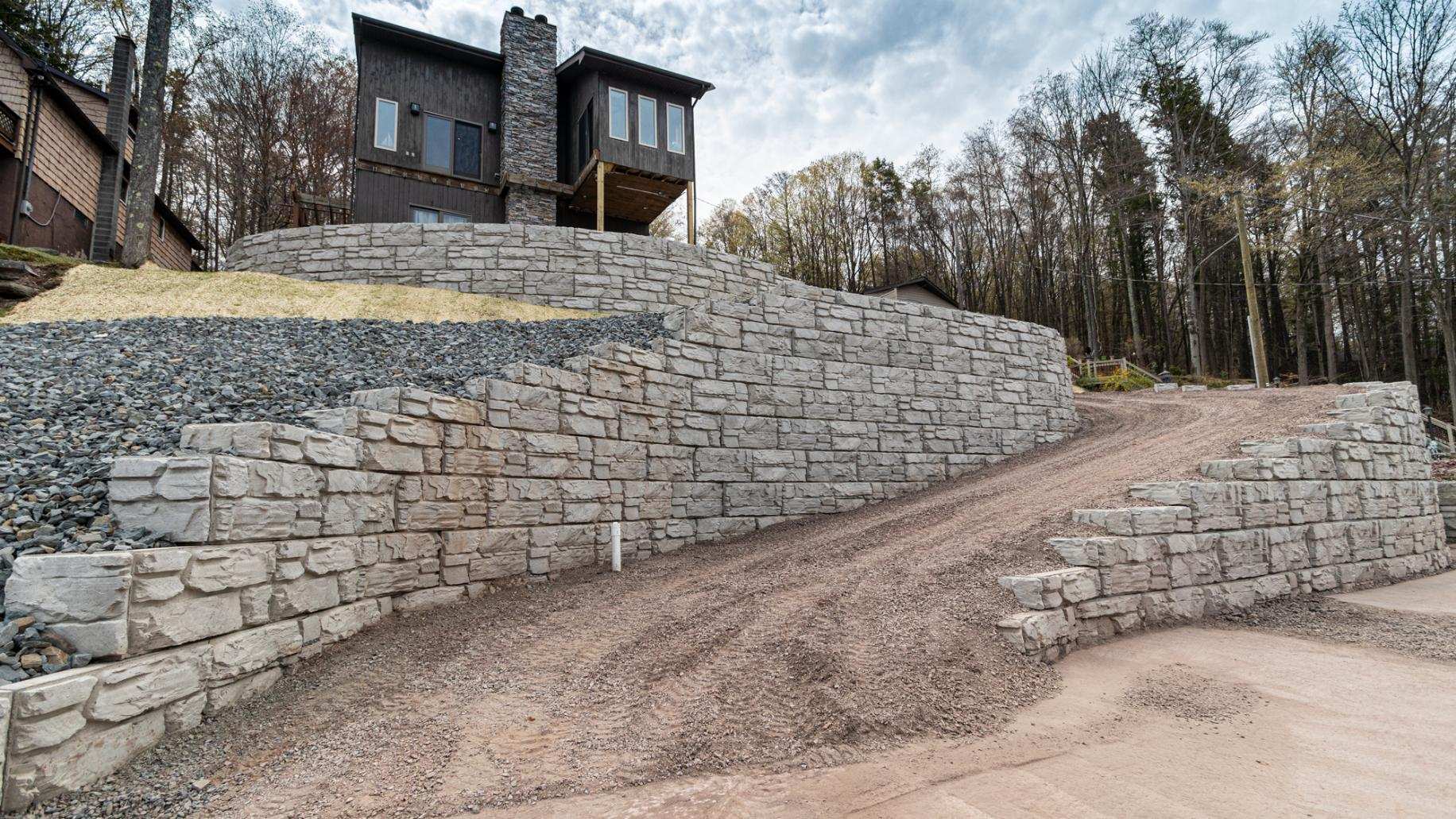
More Than Just a Wall — It’s a Soil Management System
When Do You Need a Retaining Wall?
- Your property has slopes that cause erosion or runoff problems
- You want to create level areas for patios, gardens, or outdoor living spaces
- A hillside is encroaching on your home, driveway, or other structures
- You need to manage water flow and drainage on your property
- You’re building on a sloped lot and need grade changes
- An existing wall is failing, leaning, or showing signs of structural distress
Types of Retaining Walls
Gravity Walls
Gravity walls rely on their own mass to resist soil pressure. They work best for shorter walls (under 3-4 feet) and are typically built with large stones, concrete blocks, or poured concrete. They’re simple in concept but require significant material volume.
Segmental Retaining Walls (SRW)
Segmental walls use interlocking concrete blocks that stack together with a slight setback on each course. They’re the most popular choice for residential projects because they’re versatile, durable, and available in many colors and textures. For walls over 4 feet, they’re typically reinforced with geogrid fabric.
Natural Stone Walls
Natural stone walls offer unmatched beauty and character. They’re built with limestone, sandstone, or fieldstone and can be either dry-stacked or mortared. Natural stone works well in the Ozarks landscape and ages beautifully over time.
Poured Concrete Walls
Poured concrete walls are the strongest option and ideal for tall walls, heavy surcharge loads, or commercial applications. They require forms, rebar reinforcement, and proper curing but offer maximum structural performance.
Timber Walls
Timber walls (landscape timbers or railroad ties) are an economical option for low walls but have a limited lifespan due to rot and insect damage. We generally recommend block or stone alternatives for longevity.
The Critical Role of Drainage
Drainage is the single most important factor in retaining wall longevity. Without proper drainage, water builds up behind the wall, creating hydrostatic pressure that can cause bulging, cracking, and eventual failure. A properly built retaining wall includes:
- Gravel backfill — Free-draining aggregate behind the wall face
- Drainage pipe — Perforated pipe at the base of the wall to collect and redirect water
- Filter fabric — Geotextile fabric to prevent soil migration into the drainage aggregate
- Weep holes — Openings that allow trapped water to escape through the wall face
- Surface drainage — Proper grading above and around the wall to direct water away
Engineering and Permits
Retaining wall requirements vary by municipality, but general guidelines include:
- Walls under 4 feet: Typically don’t require engineering or permits in most areas, though we still recommend professional construction.
- Walls 4 feet and taller: Usually require engineered drawings, geotechnical analysis, and building permits.
- Walls with surcharge loads: Any wall supporting additional weight (driveways, structures, slopes above) needs engineering regardless of height.
At Maxwell Outdoor Design, we work with local engineers and understand Springfield-area building requirements. We handle the permit process so you don’t have to.
Retaining Wall Construction Best Practices
- Proper excavation — Dig to undisturbed soil and create a level base at least 6 inches below finished grade.
- Compacted base — Install and compact a minimum 6-inch gravel base for the first course.
- Level first course — The first course must be perfectly level — everything above depends on it.
- Drainage installation — Install drainage aggregate and pipe as you build, not as an afterthought.
- Geogrid reinforcement — For walls over 4 feet, install geogrid layers at engineered intervals to tie the wall into the retained soil.
Common Retaining Wall Failures and Why They Happen
- Poor drainage — The #1 cause of retaining wall failure. Water pressure builds behind the wall and pushes it out.
- Inadequate base preparation — Building on soft, uncompacted soil leads to settling and tilting.
- Missing geogrid — Tall walls without reinforcement will eventually lean and fail.
- Wrong materials — Using materials not rated for structural retention (decorative garden blocks, for example) in structural applications.
Frequently Asked Questions
How long does a retaining wall last?
A properly built segmental block or natural stone wall can last 50-100+ years with minimal maintenance. Timber walls typically last 15-20 years.
How much does a retaining wall cost?
Costs vary widely based on height, length, material, and site conditions. Most residential retaining walls range from $25-$75 per square face foot installed. We provide free detailed estimates for every project.
Do I need a permit for a retaining wall?
In most Springfield-area jurisdictions, walls over 4 feet measured from the bottom of the footing to the top of the wall require a permit. Walls supporting structures or driveways may require permits regardless of height.
Can a retaining wall be repaired, or does it need to be replaced?
It depends on the type and extent of failure. Minor settling or a few displaced blocks can often be repaired. Walls with significant lean, base failure, or drainage problems typically need to be rebuilt properly.
Need Help With Your Project?
Maxwell Outdoor Design provides free on-site consultations and estimates for all outdoor construction projects in Springfield, MO and the Ozarks.
Related Articles
8 min read
Choosing the Right Patio Material for Your Springfield Home
Read Article
7 min read
Utility Trenching: What Every Homeowner Needs to Know Before Digging
Read Article
8 min read