Concrete Foundations for Outdoor Structures: What Springfield Homeowners Need to Know
A detailed guide to concrete foundation types, the pouring process, and protecting your investment in Missouri’s climate.
The Foundation Your Outdoor Project Deserves
Types of Concrete Foundations
Slab-on-Grade
A slab-on-grade is a flat concrete pad poured directly on prepared ground. It’s the most common foundation for patios, outdoor kitchens, and shop buildings. A properly built slab includes a compacted gravel base, vapor barrier, reinforcement (wire mesh or rebar), and control joints.
Reinforced Footings
Footings are thickened concrete pads that support structural loads from posts, columns, or walls. They’re designed to spread the load over a larger soil area and extend below the frost line (typically 24 inches in the Springfield area) to prevent frost heave.
Grade Beams
Grade beams are continuous reinforced concrete beams that connect footings and distribute loads along their length. They’re used for larger structures, uneven terrain, or situations where soil conditions vary across the building footprint.
Pier Foundations
Pier foundations (also called sonotubes or caissons) are cylindrical concrete columns drilled deep into the ground. They’re ideal for deck posts, pergola columns, and situations where you need to reach stable soil below problem surface layers.
The Concrete Foundation Process
- Site survey and layout: Establishing exact dimensions, elevation, and utility locations.
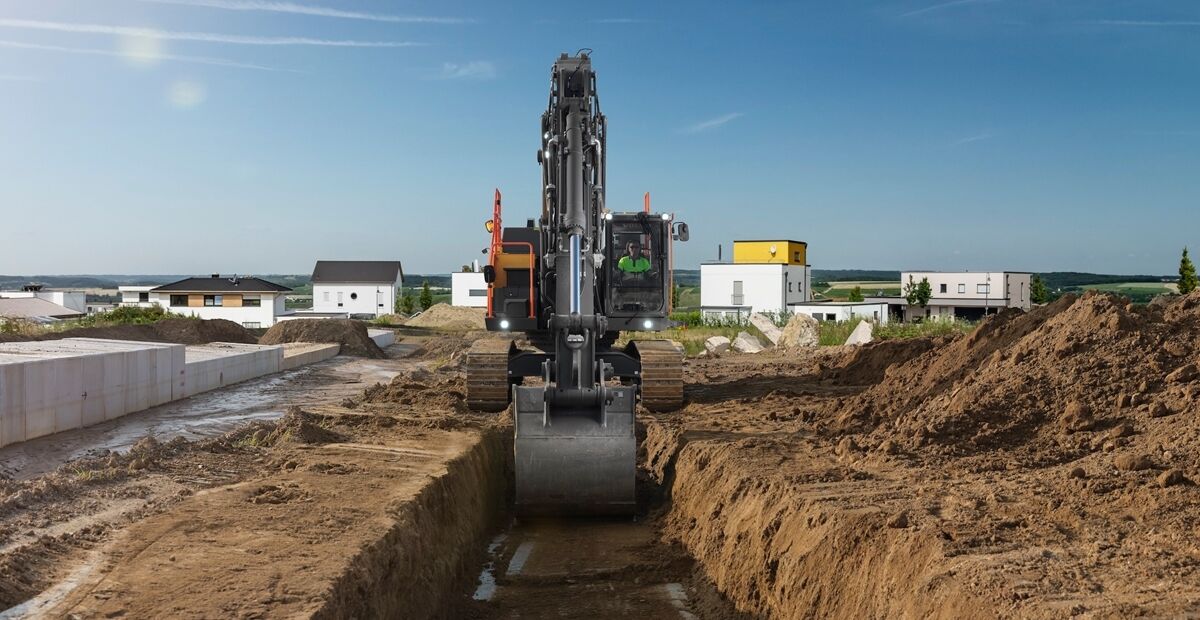
- Excavation: Digging to the required depth, removing organic material and unstable soil.
- Base preparation: Installing and compacting a gravel base (typically 4-6 inches for slabs, deeper for footings).
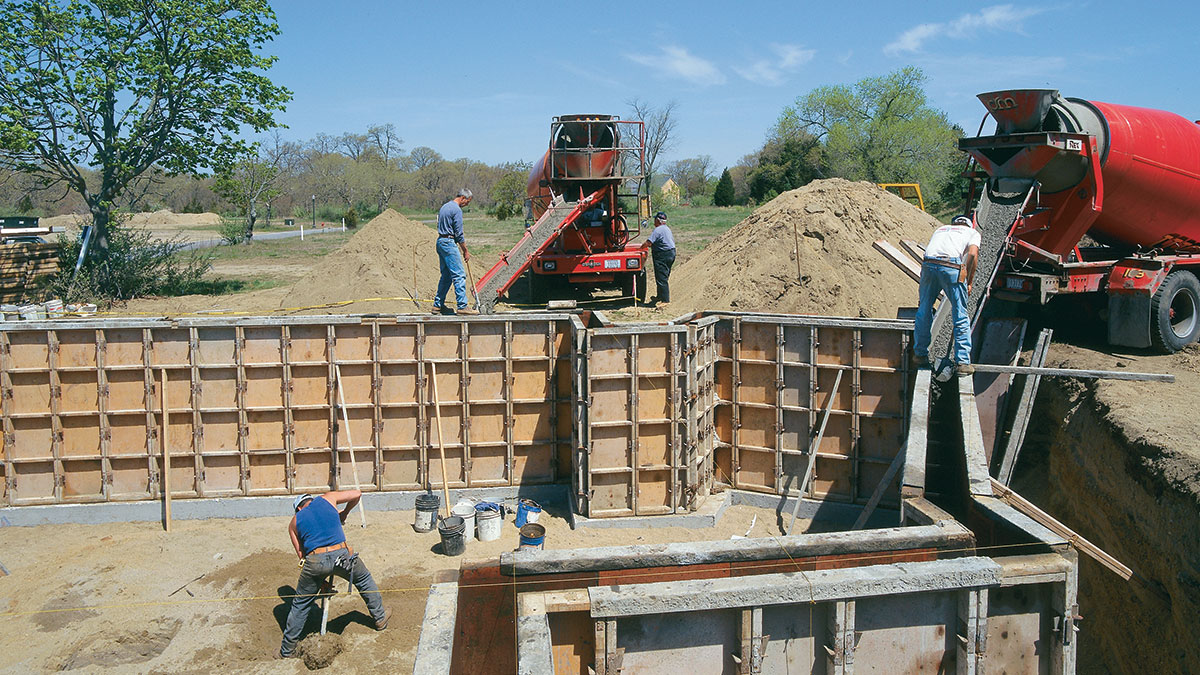
- Form construction: Building forms to contain the concrete pour at the exact dimensions and elevation.
- Reinforcement: Installing rebar, wire mesh, or fiber reinforcement per engineering specifications.
- Concrete placement: Pouring and vibrating concrete to eliminate air pockets and ensure full consolidation.
- Finishing: Screeding, floating, troweling, and applying the desired surface texture.
- Curing: Keeping the concrete properly hydrated for at least 7 days (28 days for full strength) to achieve maximum durability.
Protecting Concrete in Missouri’s Climate
Missouri’s climate presents specific challenges for concrete:
- Freeze-thaw cycles: Water enters concrete pores, freezes, expands, and causes surface scaling and internal damage. Air-entrained concrete and proper sealing are essential.
- Clay soil movement: Ozarks clay soils expand when wet and shrink when dry, creating uneven pressure under foundations. Proper base preparation and drainage mitigate this.
- Thermal expansion: Temperature swings of 100°F+ between seasons cause concrete to expand and contract. Control joints are placed at regular intervals to manage this movement.
- Moisture management: Keeping water away from foundations through grading, gutters, and drainage prevents soil erosion and hydrostatic pressure.
Why Does Concrete Crack?
All concrete cracks eventually — the goal is to control where and how it cracks. Common causes include:
- Shrinkage: Concrete loses volume as it cures, creating tensile stress
- Thermal changes: Temperature variations cause expansion and contraction
- Overloading: Weight exceeding the design capacity
- Soil movement: Settling, heaving, or washing out beneath the slab
- Insufficient reinforcement: Rebar or mesh placed incorrectly or not at all
Control joints (the lines cut into concrete) create deliberate weak points where the concrete cracks in a straight, predictable line rather than randomly across the surface.
Frequently Asked Questions
How deep do concrete footings need to be in Springfield, MO?
Footings should extend below the frost line, which is approximately 24 inches in the Springfield area. The actual depth depends on soil conditions and structural loads.
How long does concrete need to cure?
Concrete reaches approximately 70% of its strength in 7 days and full strength in 28 days. We recommend keeping the surface moist and avoiding heavy loads for at least 7 days after pouring.
What is the minimum concrete thickness for an outdoor slab?
Most outdoor slabs should be a minimum of 4 inches thick. Areas supporting vehicles (driveways) should be 5-6 inches. Structural footings are typically 8-12 inches or more depending on loads.
How much does a concrete foundation cost?
Costs vary by type and complexity. Simple slabs run $6-12/sq ft installed. Footings, grade beams, and pier foundations are priced by the linear foot or per unit and vary significantly based on depth and reinforcement requirements.
Need Help With Your Project?
Maxwell Outdoor Design provides free on-site consultations and estimates for all outdoor construction projects in Springfield, MO and the Ozarks.